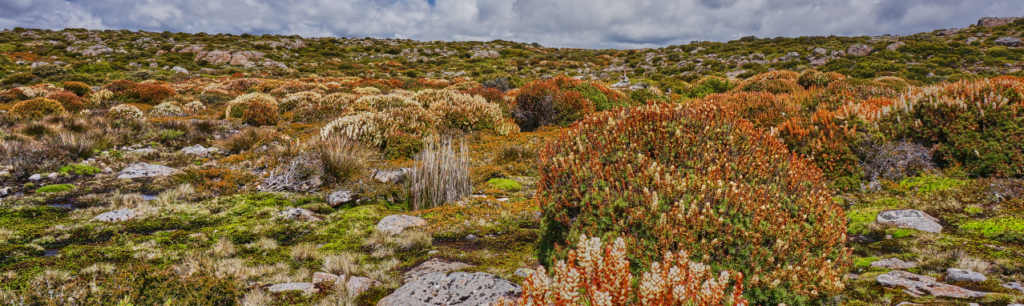
From the earliest days of Boots N’ All, many of our more energetic walkers were keen for us to include walks that would allow them to gain “peakbagger points”.
What is Peak Bagging?
By the 1950s, bushwalking into Tasmania’s wilderness area was becoming more accessible as more people worked in occupations that included annual leave, and increasing car ownership allowed even the less well-off to head off for single day or weekend adventures, often from newly established logging, mining or hydro-electric roads. This in turn led to the growth of walking clubs. Hobart Walking Club began in 1929, but recreational bushwalking pre WWII was the preserve of the well-off, who on occasions enlisted experienced bushmen from the timber, grazing, trapping or mining industries to guide them. Launceston Walking Club began in 1946, and North West Walking Club in 1965. In 1965, Hobart Walking Club set up a list of a mere 6 peaks, but by 1968, Tim Christie had established the first extended list, published in Tasmanian Tramp that year.
Other clubs were established around the state, including Deloraine Walking Club and Launceston Ramblers in 1972, and Scripture Union’s Boots N’ All followed in 1981, based in Launceston, but inspired by Hobart’s Southern Bushies about which we know very little, except that it had already been going for some time by then, led by, among others, “the legendary” Ray Spedding. Peak bagging was popular across the clubs. From stories told to the present writer, it may have been the practice in the very early years of the peakbagger system for walkers to carry cards with the list of peaks, and the walk leader would sign them to attest that they had reached that peak, but early Boots N’ All leaders assure us this was never the case in Boots N’ All, and for all bushwalkers, tallying of points has remained an “honesty system” – people keep track of their own points and these days, download a spreadsheet to mark them off and calculate their tally – and repeat visits to a peak don’t score further points! The rating levels have long been a source of banter and humour…
< 50 Points Downright Idle
50 – 99 Points Member of Old Lags Brigade
100 – 199 Points Dishonourable Peak-Bagger
200 – 399 Points Honourable Peak-Bagger
400 – 599 Points Peak-Bagger Extraordinary
>or=600 Points Peak-Bagger Supreme – “Living Legend”
More details on Hobart Walking Club’s website [link]. That page also includes some of the other downloadable lists. From that site, we read,
The peaks are grouped into areas and then listed in alphabetical order for convenience. Ranges have been included where the highest point has not yet been named. In each case the highest rock must be touched, regardless of spot heights provided on maps.
To each peak points between 1 and 10 have been given, according to notability (or notoriety), walking distance, walking elevation required, type of terrain and tracks, height of peak, and proximity to other peaks, which peak-baggers may count to their credit. Repeat ascents do not count.
The current version is the 2017 list, but there are those who felt that the changes from earlier lists, particularly the removal or downgrading of hard-earned peak points, seems a little unfair – a moving of the goal posts! For some of those people, the 2000 version is counted as definitive. You can download the 2000 version from our website here [link].
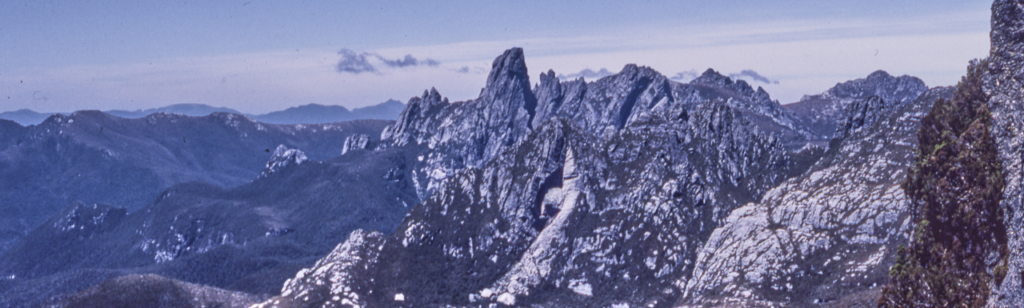
The Abels
Inspired by another peak bagging system, The Munros for peaks in Scotland, Bill Wilkinson put together The Abels in 1994, backed up by 2 published volumes which included photos, access details, routes and other information. The key difference for a peak to qualify as an Abel is that mountains need to be higher than 1,100m above sea level and be separated from other mountains by a drop of at least 150m on all sides. While a great many of the Abels are also on the HWC Peak Baggers list, this distinction means that there are fewer Abels. See The Abels – Wikipedia for a summary of peaks and high achievers, and Home – The Abel Mountains for more information about the books, which have been revised and re-published, and include some spectacular photography.
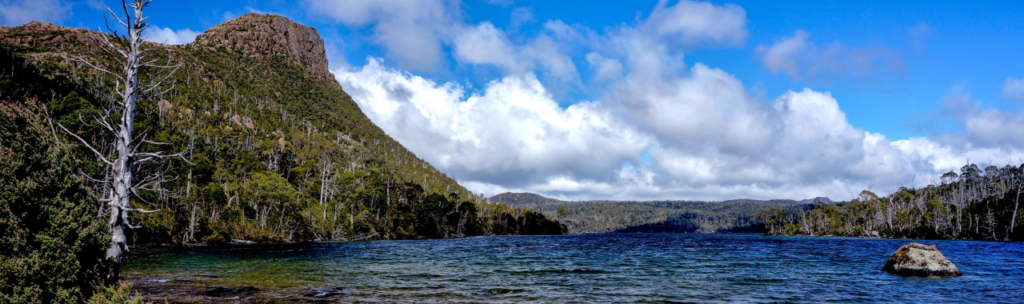
Poimenas, Abelettes, High Places, Connoisseurs
Not enough choices yet? There are other compilations. At around the same time as the Abels, we were also given Abelettes – high places, often very interesting, some quite easy to access, still with the 150m dropoff requirement, but could be considerably lower than 1100 metres altitude. This has now morphed into the Poimenas. This is the most recent list and there are many more of them, again published by Bill Wilkinson as The Poimenas: Companion to the Abels. And that’s still not all. Phil Andrew has gone to a lot of trouble to produce and update a composite list of all the various options, in the Tasmanian Peaks Composite List [link] downloadable from this website. [download].
Finally, and perhaps just Boots N’ All and walking club banter, we often refer to the PONIs when chatting about walks (usually not Boots N’ All walks) to “Points of No Interest” – for those who run out of Peakbagger, Abel, Poimena, High Places etc but like Forrest Gump, still need to keep walking.